Some Days You Need Bread
What we can learn about curiosity and being present from the simple act of going out to buy bread.
Some days you need bread. Well, almost every day in fact. One thing I love about Europe vs the UK is how freshly baked bread from a local, independent bakery is still a thing and although it’s “artisanal” it doesn’t also cost you upwards of £4. So rather than stocking up on packaged bread from the supermarket, every day or so I have the excuse to go on a “bread hunt” and have a wander round whatever village or town we happen to be in. Often this little ritual offers a very unplanned, spontaneous way to see a place, and today was no different.
We woke in the camper area of town called Bejar, on the border between Extremadura and Castile y Leon. We only stopped here as it was on the way to the Jerte Valley, known this time of year for it’s almond and cherry blossom, beautiful landscapes and hikes. These kinds of stops are often made for practical reasons, meaning we arrive with little or no knowledge or expectations of the place. There’s something intriguing and pure about this way of travelling - kind of like beginner’s mind, there’s always a sense of childlike wonder and with few expectations, comes less chance of disappointment!
Bejar has a Via Verde (green way) cycling route running from the town and off into the hills that the town sits at the foot of. Being a nature lover, my usual instinct would be to set off away from the town and into nature, but as mentioned, the call for bread was strong and so I took the Via Verde towards town.
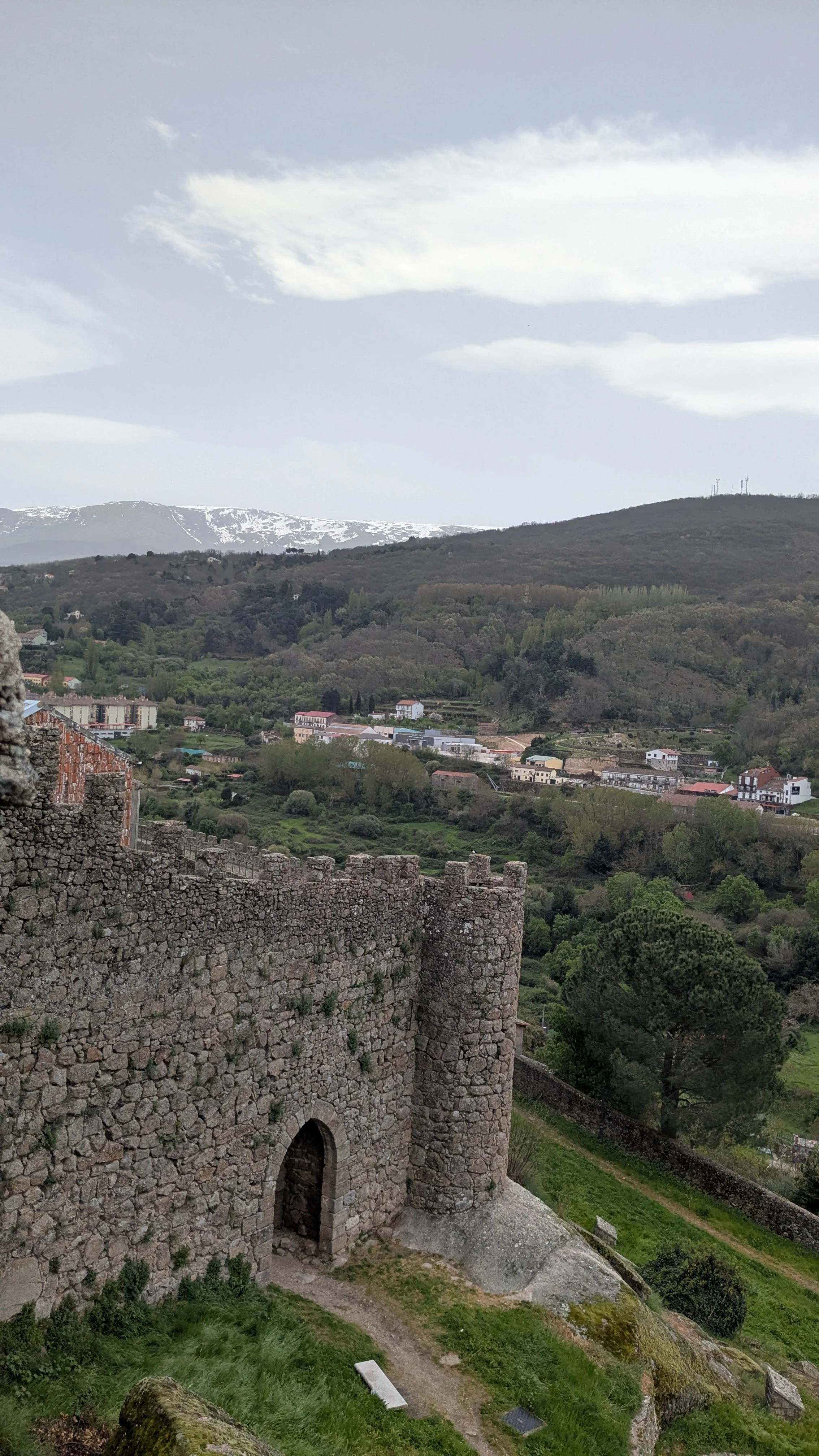
Pretty soon I came to a tunnel. “FUN!” I thought, assuming it went under the road above, and would emerge in the centre of the town above and one step closer to my bread goal. I entered the well lit, but eerie tunnel, the cool air and dampness making a mockery of my shorts and t-shirt outfit choice. I shivered a little but stomped ahead with purpose, following the tunnel as it curved round a neverending bend. I could never quite see round the corner and the corner just went on…and on…and on! Just when I was starting to feel unsure whether this wasn’t actually leading to the underworld where I would surely not find fresh bread, I saw the light! I picked up the pace and emerged into the warm air before stopping to get my bearings. I quickly realised I had passed underneath the entire town and was now on the other side much to my confusion and surprise! How many towns have a tunnel passing right the way under them?
After a short, steep hike uphill I finally entered the town where I found a welcoming committee of about 6 or 7 tiny dogs. They ran up to me yapping wildly before their owner shouted for them to stop and attempted to herd them away, which they reluctantly did. Ok, good start. I decided to walk the circumference of the town following a mix of my intuition and the ancient ramparts. I passed little houses with fresh laundry flapping in the breeze, but it was the scent of bread I was hoping for, not Ariel.
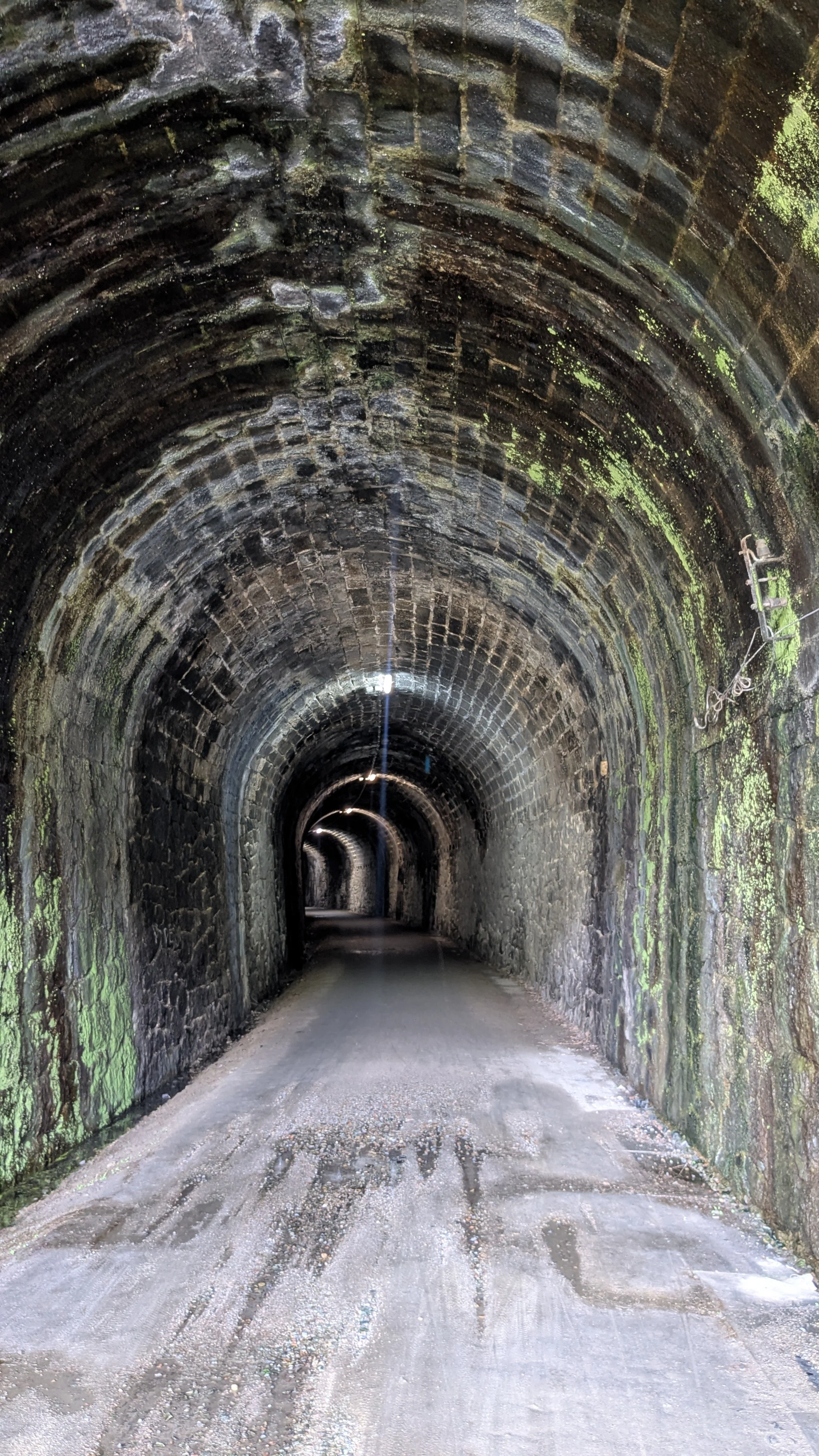
I trusted that the bread gods would take me where I needed to go eventually and the ramparts proved to be an interesting and worthwhile route, giving me an insight into the uniqueness of this town. Its ancient walls now housed some rather brutal apartment blocks that when mixed in with the stunning landscapes beyond was quite confusing for the senses. What struck me most was the wildly unusual mix of materials used for the housing. Most of the building were standard bricks and mortar, at least in part, but in most cases some of the walls or entire sides of a block were finished with tin, slate and what looked worryingly like asbesdos in some cases…and all this perched on a hill with views of the snow capped higher peaks beyond. It is really quite unlike anywhere I’ve seen.
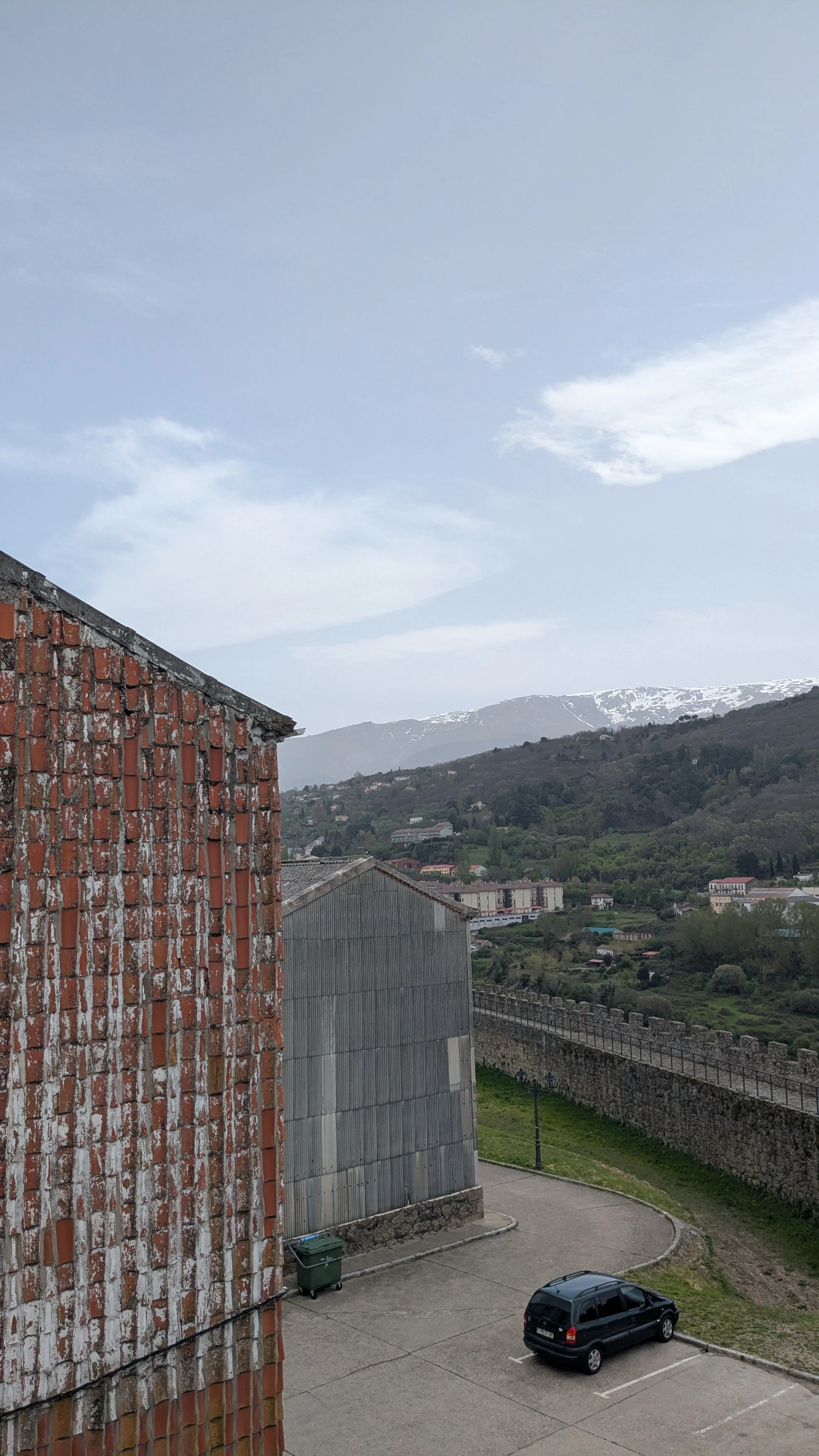
There is a clear sense here that this is a town in decline and I later discovered that it was once a thriving textile town and the huge factories with smashed windows that lay below tell part of the tale of what happened to it, left to ruin. Despite this, it didn’t feel desolate and depressing. Perhaps it was the backdrop and the generally smiling, coureous greetings I received, but I felt quite drawn to explore it even if it felt as though it were falling apart in places.
Eventually the ramparts that must once have surrounded the entire town disappeared - I don’t know much about Spanish planning laws in decades gone by but it may have been quite a feat to even save this much of the old fortress. My instincts took me upwards into the heart of the town, snaking through narrow, steep streets with tall, tightly packed together apartment blocks made from all manner of materials. Although I’ve never been, it gave me a small sense of the feeling of being in a sort of Favela in South America.
I eventually came to Plaza Mayor, a fairly understated square considering the name. The centrepiece of the square is a lovely old building that it transpires is a secondary school! Another surprising choice. The place was hardly thrumming with life on this Thursday lunchtime, but it was pleasant and relaxed with a few cafes and bars open and I sensed bread would be nearby. But as I walked another circuit around the inner town this time, I saw very few shops open until I eventually wound my way downtown. Here, there was more buzz and I passed several bakeries, unfortunately with their shutters down, including what looked an extremely promising place with this lovely illustrated image of what seems to be 3 famous local bakers! What a tease. I had clearly taken too long with my wanderings!
I felt a tad disappointed, reluctantly making my way to the chain supermarket Lupa, where I got some lunch supplies alongwith my slightly underwhelming barra de pan, and consoled myself in the lusher surroundings of the downtown park. As I munched my crusty bread I reflected on what I had discovered here and its impressions on me.
My goal had been to get bread and I had sort of failed at that. If I’d have searched on Maps for a bakery and headed straight to it, I’d no doubt have got what I was looking for. But in taking a less linear approach where the route to my goal was one of curiosity, presence and open-mindedness, I experienced much more than a loaf of bread could have given me. Reflecting on this simple tale of discovery, I see this way of exploring as being in a nutshell (or perhaps a breadbasket?) one of the key principles of slow travel. When we come on holidays we often bring a pretty rigid itinerary and with only a few days to fit everything in, its understandable. But what do we miss by keeping these blinkers on, by marching from one point of interest to the next? What do we gain by taking our time and letting ourselves be truly present? What if we did less and took more time to simply be, to wander and let our senses guide us.
What if we could apply this idea to our everyday lives where we are afforded so little time to slow down, and where the pace and demands of a life where bread-winning is the bottom line. There are small every day ways to experience the possibilities of a less linear, more present, slower way of living, whatever you think life may demand of you.
So next time you decide to “just nip out and get some bread”, think about what else you can be open to experiencing on the way.